Scribe of the Gods — Writing, Hieroglyphs, and the Divine Mind
In the sacred culture of Kemet, writing is not a human invention; it is a divine revelation. The hieroglyphs, known as medu-netjer (“words of the gods”), were understood as emanations of cosmic intelligence, patterns of sound and vision that reflect the architecture of creation. The Neter who governs this holy science is Tehuti, the Scribe of the Gods, whose luminous mind holds the knowledge of all that exists.
To speak of Tehuti as scribe is to approach the mystery of how divine thought becomes symbol, how symbol becomes language, and how language becomes a vessel of eternal truth. Through him, the invisible is made visible, and the cosmos becomes legible to the human soul.
The Divine Origin of Writing
Egyptian tradition attributes the creation of writing directly to Tehuti. It is said that he perceived the patterns of creation and expressed them in signs that could be read, spoken, and enacted. These signs were not arbitrary. They arose from:
- the laws of nature
- the movements of celestial bodies
- the cycles of time
- the forms of living beings
Thus, writing is a reflection of the world’s inherent order. To write is to participate in divine cognition.
Medu-Netjer — The Words of the Gods
The hieroglyphic script is called medu-netjer, meaning “words of the gods.” This name reveals its sacred status. Each glyph is both image and sound, symbol and vibration. It conveys meaning through:
- form — the visible pattern
- sound — the spoken resonance
- concept — the idea it embodies
- essence — the spiritual quality it represents
Through these layers, hieroglyphs form a language of profound clarity. They speak not only to the intellect but to the intuition, awakening recognition within the depths of consciousness.
Writing as the Stabilisation of Creation
Tehuti’s role as divine scribe extends beyond communication; it encompasses the very structure of reality. When he writes, he inscribes the laws of the cosmos upon the tablets of existence. Creation becomes stable because it is recorded. Order endures because it is articulated.
This principle is reflected in the phrase:
“Tehuti writes the world into being.”
Writing, in this sense, is the eternal memory of creation, the means by which truth persists across ages.
The Scribe’s Palette — Icon of the Divine Mind
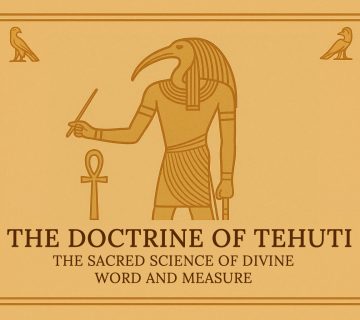
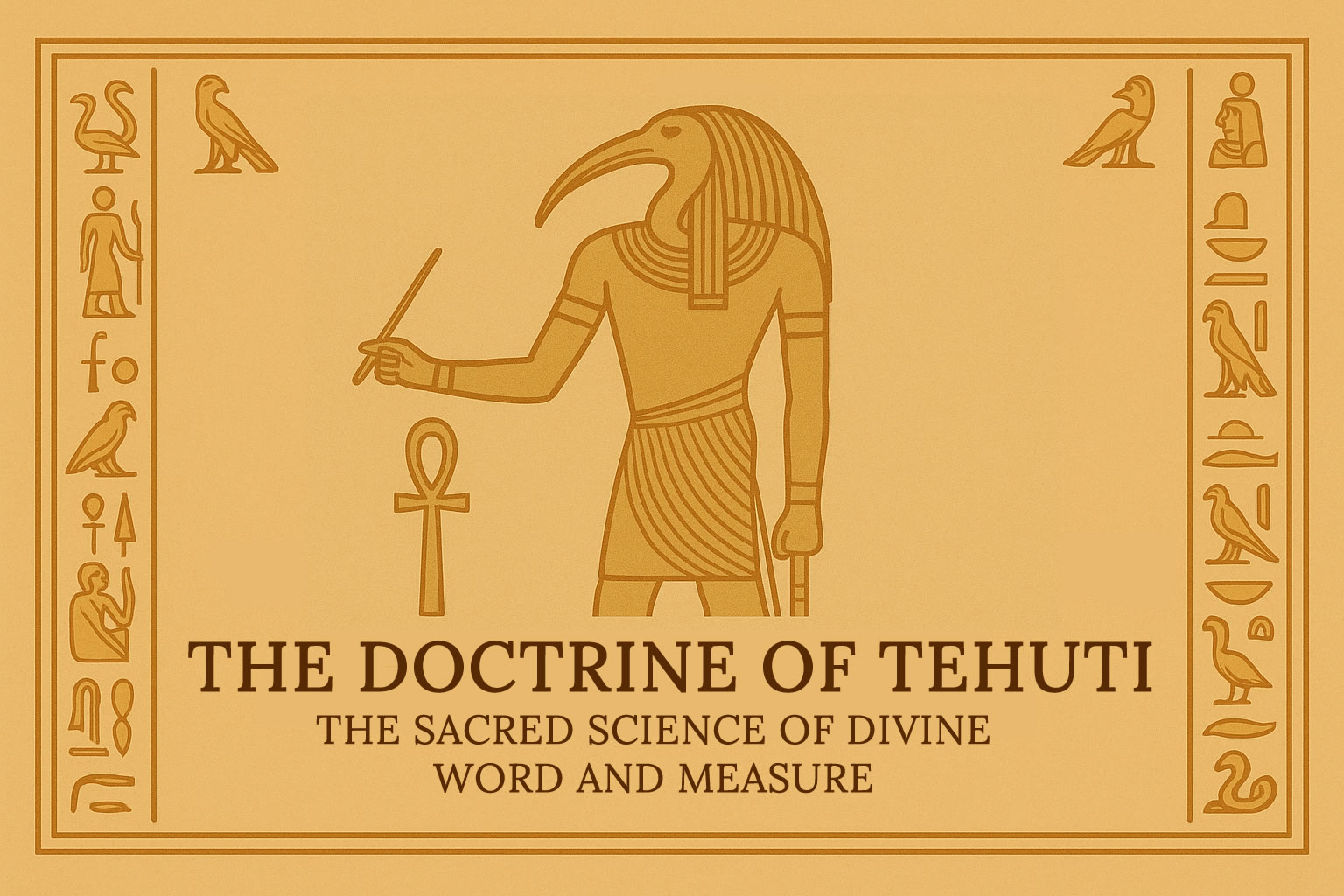
Tehuti is often depicted carrying the scribe’s palette, complete with reed brush and ink pots of black and red. These instruments symbolize his mastery over:
- black ink — the recording of what is established
- red ink — the marking of names, power, and sacred distinctions
- the reed brush — the channel between mind and manifestation
In the hands of Tehuti, these tools represent the precision of thought, the authority of speech, and the clarity of divine memory.
Tehuti as Recorder of Souls
In the Hall of Two Truths, where the heart is weighed against the feather of Maʽat, Tehuti stands with his palette, ready to record the outcome. This role reveals him as:
- the witness of conscience
- the recorder of truth
- the guardian of spiritual integrity
His presence ensures that the judgment reflects perfect balance, that nothing is overlooked, and that each soul is measured according to the truth of its being.
The Mind as Sacred Tablet
In the teachings of Kemet, the human mind is a reflection of the divine mind. Therefore, every seeker carries within themselves a subtle tablet upon which wisdom may be inscribed. When one cultivates clarity, discipline, and reflection, the mind becomes worthy of receiving the insights of Tehuti.
In this sense, meditation, study, and ethical speech are means of preparing oneself to receive divine knowledge, becoming, in a symbolic sense, a scribe of one’s own soul.
Hierarchy of Symbols — How the Cosmos Speaks
Tehuti governs the hierarchy of symbols that structure human understanding. This hierarchy includes:
- sound — vibration expressed through speech
- sign — image conveying meaning
- concept — thought awakened by the sign
- principle — eternal law revealed through understanding
Through this chain, divine truth travels from its unspoken origin into intelligible form. All sacred science rests upon this hierarchy.
Writing as Spiritual Alignment
To engage in writing with sincerity and clarity is to align oneself with Tehuti. The act of shaping words, expressing truth, and organizing thought becomes a spiritual discipline. Writers in Kemet often prayed to Tehuti for:
- steady hand
- clear mind
- truthful intention
- balanced expression
Thus, writing becomes more than communication; it becomes participation in the divine work of ordering life.
Conclusion: The Eternal Scribe
Tehuti, the Scribe of the Gods, stands as the guardian of knowledge, the architect of symbols, and the luminous mind that brings clarity to creation. Through hieroglyphs, speech, and thought, he bridges the visible and invisible worlds. To honour Tehuti is to honour the sacred covenant between intelligence and creation, the recognition that knowledge is a divine gift, and truth a sacred responsibility.
“Through the pen of Tehuti, eternity becomes visible to the human soul.”
Continue to Part VI: Tehuti and the Human Mind — Intuition, Insight, and Higher Thought.