The Voice of Maʽat — Djehuty and the Sacred Word
Before time began, consciousness spoke. The divine utterance resounded through the waters of Nun, giving shape to the unformed. That first speech was truth, and that truth was Maʽat. To speak rightly is to create in harmony with her; to speak falsely is to distort the fabric of being. This principle was personified in Djehuty (Thoth), the luminous scribe and voice of the gods, who gives measure to the Word and records the law of order.
Through Djehuty, the invisible thoughts of the divine become visible sound. He is the conscious articulation of Maʽat, the bridge between mind and manifestation. Together they reveal that speech, when aligned with truth, is not mere communication but creation itself.
The Union of Maʽat and Djehuty
In sacred texts, Maʽat is often described as the “beloved of Djehuty.” Their union symbolizes the harmony of truth and expression, perception and articulation. Maʽat provides the law; Djehuty gives it form through the spoken and written word. Thus, every inscription, decree, or prayer becomes a reflection of cosmic measure.
Within this mystery lies the understanding that speech is sacred architecture. When sound carries the vibration of truth, it orders the field of reality; when it departs from measure, it dissolves into chaos (Isfet). The initiate therefore learns to guard the tongue as one guards the temple gate.
The Creative Word — Hu and Heka
Egyptian theology teaches that creation unfolds through Hu (divine utterance) and Heka (creative power). Djehuty governs Hu, speaking the measured sound that awakens life. Heka then vitalizes that sound, giving it movement and form. Together they manifest the will of Maʽat, consciousness ordering itself through sound and energy.
This process continues within the human being. Every thought is a seed of sound awaiting expression; every word is a spark of creation. When spoken from a balanced heart, words extend the harmony of the cosmos into the world of men.
The Power and Responsibility of Speech
To the Egyptians, words were alive. They carried intention as vibration, shaping both the speaker and the listener. A false word could wound the spirit; a truthful one could restore life. Hence, ethical speech was not moral restraint but spiritual precision, the conscious act of aligning language with divine truth.
Temples inscribed with hymns to Maʽat and Djehuty remind the initiate that sacred language sustains the gods themselves. “Ra lives by Maʽat,” says the inscription, “and speaks through the tongue of Thoth.” This means that every act of creation, cosmic or human, is maintained through the rhythm of truthful speech.
The Scribe of the Gods
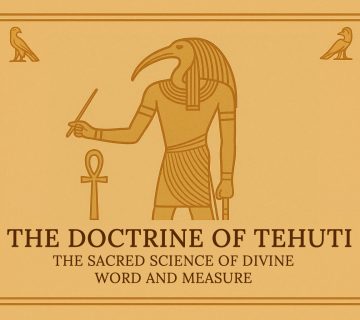
Djehuty is portrayed with the head of the ibis, his pen poised above the scroll of eternity. As divine scribe, he records the unfolding of creation and the balance of every soul. His presence in the judgment hall beside Maʽat affirms that nothing escapes the measure of consciousness. All thought, word, and deed are inscribed upon the subtle tablet of the heart.
In the human microcosm, this symbolizes the faculty of awareness that observes without distortion, the inner witness. When we cultivate this clarity, our perception becomes the pen of Djehuty, writing truth into our lives.
The Word as Offering
Among the sacred rites, priests offered not only incense and bread but the spoken Word. To speak praise, prayer, or invocation was to offer vibration itself as nourishment to the gods. The utterance of truth became the highest sacrifice, for in truth the universe is sustained.
Even today, every sincere word of gratitude, blessing, or integrity continues that ancient rite. The voice, used rightly, becomes a continual offering of harmony to creation.
The Silence Behind the Word
Yet all sacred speech arises from stillness. Djehuty listens before he writes; he measures before he speaks. This silence is not emptiness but the womb of Maʽat, the quiet awareness from which truth emerges. Only in silence can the voice of the divine be heard without distortion.
In meditation, the seeker experiences this silence as luminous presence. From it flows speech that heals rather than divides, reveals rather than conceals. To know when to be silent and when to speak is the highest expression of wisdom.
The Human Voice as Instrument of Maʽat
When the heart is aligned with truth, the human voice becomes an instrument of divine resonance. Words of compassion, courage, and clarity restore balance in others and within oneself. The teacher, healer, and artist alike become vehicles of Maʽat through sound and expression.
This is the path of the hem-netjer Maʽat, the servant of truth who speaks only what harmonizes with divine order. In every era, such voices reawaken the world to the remembrance that creation listens.
Writing as the Continuance of Creation
Hieroglyphs were called medu netjer, “words of the gods.” Each symbol was both sound and form, vibration and image. To inscribe them was to participate in divine creation. The same remains true for every act of writing inspired by truth: it is the shaping of consciousness into visible form.
When you write, teach, or proclaim in alignment with Maʽat, you continue the work of Djehuty himself. Your words become bridges between the unseen and the seen, renewing the covenant between thought and manifestation.
Living the Word — The Embodiment of Truth
The highest initiation of Djehuty and Maʽat is to live what one speaks. The ancient title maa-kheru, “true of voice” denotes not eloquence but integrity. When word and being are one, speech becomes law. The initiate no longer seeks truth outside; he becomes its living expression.
Thus, every phrase, silence, and gesture may serve as an utterance of harmony. In this realization, the individual voice merges with the cosmic Word, and creation is renewed through consciousness aligned with truth.
Conclusion: The Eternal Word of Maʽat
All worlds endure through speech that reflects balance. When we speak from clarity and love, the universe responds in kind. To utter truth is to participate in the divine act of creation; to listen deeply is to return to the silence from which all words arise. Between these two, silence and sound, the rhythm of Maʽat forever sings.
“He who speaks with a balanced heart builds eternity with his breath.”
Continue the journey in Part VII: The Embodiment of Maʽat — Human Consciousness as Cosmic Mirror.